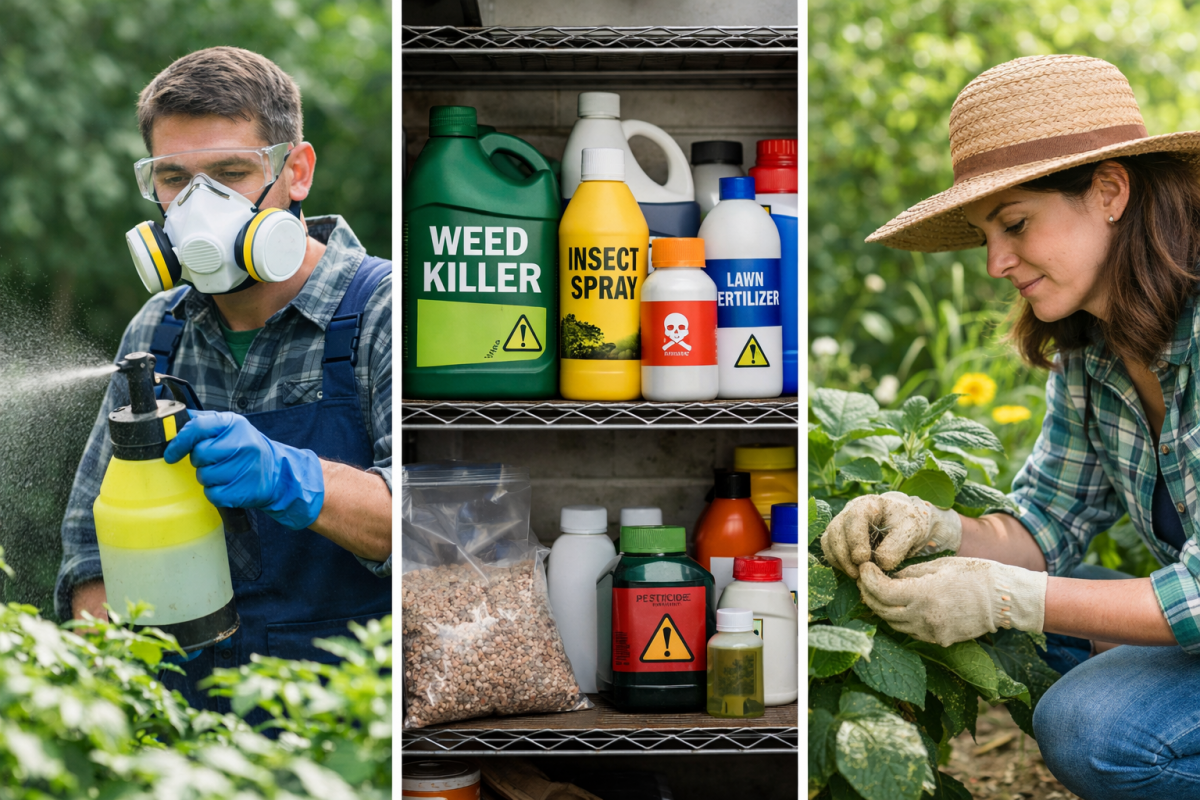
Working with fertilizers, pesticides, and other chemicals in the garden requires special care. Even common “home-use” products can be hazardous to humans, pets, and plants if misused. Understanding the risks, following proper safety practices, and choosing alternative methods can help gardeners work safely while minimizing environmental impact.
Understanding Chemical Risks in Home Gardening
Many gardeners assume chemical risks only exist in large-scale or commercial operations. In reality, home-use products can also pose serious dangers.
Why “Home” Chemicals Can Still Be Dangerous
Even organic fertilizers or insecticides can cause skin irritation, allergic reactions, or poisoning if handled incorrectly. For example, highly concentrated nitrogen fertilizers can burn plant leaves and irritate the skin.
Differences Between Synthetic and Organic Products
-
Synthetic chemicals — highly concentrated, fast-acting, but potentially toxic.
-
Organic products — natural ingredients (compost, plant extracts) that are generally safer, but excessive use can disrupt soil balance and contaminate water sources.
Cumulative Exposure
Many chemicals accumulate in soil, water, and plants. Long-term use can lead to toxic buildup, affecting humans, pets, and beneficial insects.
Safe Handling and Application
Safe chemical use begins with proper preparation and application techniques.
 Reading Labels and Dosages
Always follow product labels and recommended doses. More is not better — excessive application can harm plants and pose health risks.
Using Protective Equipment
-
Gloves and long sleeves to protect skin
-
Safety glasses to protect eyes
-
Masks or respirators to protect the respiratory system
Protective gear is especially important when handling powders or concentrated liquid solutions.
Working in Appropriate Weather Conditions
-
Avoid windy conditions to prevent drift
-
Do not apply chemicals before rain, which may wash them into waterways
-
Early morning or late evening is best to avoid strong sun and heat
Storage and Disposal of Garden Chemicals
Even proper use doesn’t guarantee safety if chemicals are stored or disposed of incorrectly.
Safe Storage in Homes with Children and Pets
-
Store all chemicals in locked cabinets, out of reach of children and animals
-
Preferably in a separate room or on a high shelf
-
Keep containers tightly sealed to prevent spills and fumes
Expiration and Disposal
-
Check manufacturing dates and expiration
-
Dispose of old or expired chemicals at authorized collection points
-
Never pour chemicals down drains or onto soil
Common Gardening Mistakes
-
Storing chemicals in plastic bags or in direct sunlight
-
Using leftover products from previous seasons without checking expiration
-
Mixing different chemicals, which can cause dangerous reactions
Lower-Risk and Preventive Alternatives
Reducing chemical use and relying on preventive methods can protect both health and the environment.
Minimizing Chemical Use
-
Apply fertilizers and pesticides only where needed
-
Use recommended doses
-
Combine chemical methods with organic and mechanical approaches
Biological and Mechanical Methods
-
Beneficial insects (ladybugs, lacewings) to control pests
-
Mulching and composting to maintain soil fertility
-
Hand removal of weeds and pests instead of chemical sprays
Prevention Over Treatment
-
Plant pest- and disease-resistant varieties
-
Regularly monitor soil and plant health
-
Plan crop rotation and companion planting to naturally reduce pests
Table: Common Garden Chemicals and Safety Precautions
| Chemical Type | Common Risks | Safety Measures |
|---|---|---|
| Synthetic fertilizers (NPK, ammonium nitrate) | Skin irritation, burns, water contamination | Gloves, proper dose, store away from children |
| Pesticides and insecticides | Eye irritation, poisoning, toxic to bees | Mask, gloves, avoid windy days, follow instructions |
| Herbicides | Soil and water contamination, plant damage | Targeted application, avoid runoff |
| Organic fertilizers (manure, compost tea) | Bacterial contamination, odor | Gloves, proper composting, controlled application |
| Fungicides | Respiratory irritation, toxicity | Protective clothing, eye protection, follow label |
Checklist: Chemical Safety in the Garden
-
Read label instructions carefully
-
Use gloves, eye protection, and masks when needed
-
Apply only recommended amounts
-
Avoid windy or rainy conditions
-
Store chemicals out of reach of children and pets
-
Check expiration dates before use
-
Dispose of old chemicals safely at authorized collection points
Safety Reminders
-
Even “safe” home chemicals can be hazardous if misused
-
Use protective gear for skin, eyes, and breathing
-
Storage and disposal are just as important as proper application
-
Reducing chemical use and employing biological methods protects health and the environment
-
Planning and prevention prevent most pest and disease issues
Conclusion
Working with fertilizers and garden chemicals requires awareness and discipline. Understanding risks, using protective equipment, following label instructions, and properly storing and disposing of products minimize danger to humans, pets, and the environment. Combining chemical, organic, and mechanical methods ensures gardening is safe, effective, and environmentally responsible.