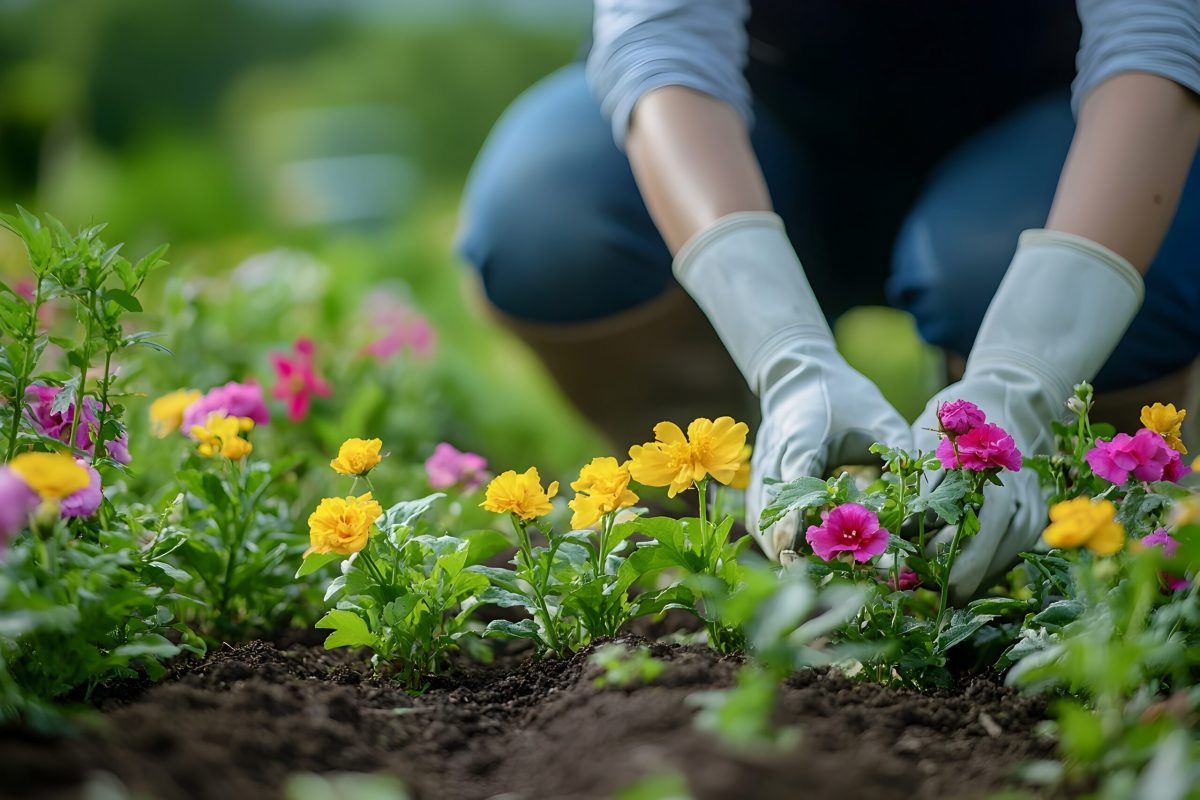
In an environment shaped by constant information pressure, accelerated daily rhythms, and chronic stress, mental health has become a central concern. Gardening is increasingly viewed not only as a hobby or a way to improve outdoor spaces, but also as a practical tool for psychological self-support. This effect is especially notable in coastal regions, where natural surroundings, climate, and lifestyle create unique conditions for restoring attention and emotional balance.
Why Gardening Affects Mental Health
The connection between interaction with nature and psychological well-being is well supported by research. Gardening combines several factors that positively influence mental health: moderate physical activity, sensory engagement, a sense of control, and visible outcomes of effort.
While working in a garden, attention shifts away from abstract worries toward concrete, tangible actions. Watering, planting, pruning, or weeding require presence in the moment, reducing ruminative thinking—the repetitive cycling of anxious thoughts. This state resembles a mild form of mindfulness, but without the need for structured practice.
Equally important is the sense of cause and effect. In modern life, the results of effort are often delayed or unclear. In a garden, the relationship between action and outcome is immediate and visible: a plant either takes root or it does not; growth can be observed over time. This strengthens a sense of competence and reduces feelings of helplessness commonly associated with depression and chronic stress.
Gardening also affects physiological stress responses. Studies show reduced cortisol levels after working with soil and plants. Contact with natural environments helps regulate the nervous system, allowing a shift from constant alertness to a restorative state.
The Psychological Impact of Coastal Environments
Coastal regions possess specific natural characteristics that enhance the therapeutic effects of gardening. Sea air, higher humidity, milder seasonal changes, and natural soundscapes create an environment conducive to cognitive and emotional recovery.
The sound of waves, open horizons, and continuous air movement reduce cognitive overload. Unlike urban spaces, where attention is constantly fragmented, coastal settings support softer, less effortful focus. Gardening in these conditions enhances what psychologists describe as attention restoration—the brain’s ability to recover after prolonged mental strain.
Climate stability also plays a significant role. In many coastal areas, gardening is possible for most of the year, turning it into a regular practice rather than a seasonal activity. Consistency is particularly important for mental health, as repeated routines provide a sense of stability and predictability.
Coastal plants themselves offer an additional psychological dimension. Adapted to wind, salt exposure, and sandy soils, they require patience and observation rather than rigid control. Caring for such plants encourages flexibility and acceptance, reinforcing adaptive thinking patterns.
 The Garden as a Space for Emotional Regulation and Meaning
For many people, a garden becomes more than a functional space—it turns into a personal environment for emotional regulation. Unlike work or home settings, gardens do not demand constant productivity. They allow pauses, mistakes, and unfinished tasks, which is especially valuable for individuals experiencing burnout.
Gardening also reshapes one’s relationship with time. Plants develop at their own pace, and this pace cannot be accelerated without consequences. Over time, this reduces internal pressure and the expectation of immediate results, which are major contributors to chronic stress.
Gardens often carry symbolic meaning. Planting new seeds may coincide with personal transitions, while caring for plants becomes a way to process emotions. The loss of a plant is not experienced as failure, but as part of a natural cycle, fostering a more resilient attitude toward change and loss.
The social dimension should not be overlooked. In coastal communities, gardening often has a shared or communal aspect—exchanging plants, working together, or simply talking outdoors. These interactions reduce social isolation and strengthen a sense of belonging, a key factor in psychological well-being.
Practical Benefits and Limitations of Gardening as a Therapeutic Tool
Despite its benefits, gardening should not be viewed as a universal solution to mental health challenges. Its impact depends on individual preferences, physical capacity, and contextual factors. For some, gardening provides calm and grounding; for others, it may become a source of stress if accompanied by rigid expectations or excessive physical demands.
Gardening is most beneficial when approached as a process rather than a performance-driven project. Coastal environments naturally support this mindset, as weather conditions and environmental constraints encourage adaptability and acceptance of uncertainty.
The table below summarizes key psychological effects of gardening in coastal settings.
| Aspect | Psychological Effect | Notes |
|---|---|---|
| Physical activity | Reduced anxiety | Moderate, non-exhaustive movement |
| Contact with nature | Attention restoration | Stronger near water |
| Rhythm and cycles | Emotional stability | Repetition reduces stress |
| Social interaction | Reduced isolation | Common in coastal communities |
| Symbolic meaning | Emotional processing | Growth and loss as natural cycles |
It is important to emphasize that gardening does not replace professional mental health care. However, it can serve as a valuable complementary practice. Its strength lies in accessibility and low barriers to entry—even a small plot or a few containers can provide meaningful psychological benefits.
Key Takeaways
-
Gardening reduces stress through focused attention and moderate physical activity.
-
Coastal environments amplify mental health benefits through climate and sensory factors.
-
Regular interaction with plants supports a sense of stability and control.
-
Gardens can function as spaces for emotional regulation and reflection.
-
The greatest benefits emerge when the process is valued over outcomes.
Conclusion
Gardening in coastal regions can be seen as an accessible form of mental health support integrated into everyday life. It combines gentle physical activity, direct contact with nature, and a clear rhythm of actions, all of which help reduce stress and restore attention.
Its value lies not in achieving perfect results, but in the process of care and observation. Coastal environments enhance this effect through climate, open space, and sensory calm. In this context, the garden becomes not a task to complete, but a resource—simple, sustainable, and capable of supporting well-being without demanding special conditions.