Maintaining a traditional lawn in the Southeastern United States is not just a demanding job — it is often an expensive and endless one. Hot, humid summers encourage fungal diseases, weeds grow at incredible speed, and weeks of heavy rainfall can undo hours of careful aeration, fertilizing, or reseeding. That’s why more and more homeowners and gardeners are turning toward an alternative: groundcovers that can fully or partially replace turf while keeping the landscape beautiful, resilient, and much easier to care for.
Groundcovers are more than simply a “soft green carpet.” They are a strategic tool for creating a sustainable, low-maintenance garden that stands up to the unique challenges of Southeastern climate. From erosion control to water conservation, these plants can transform your yard into a vibrant ecosystem that requires a fraction of the upkeep of a traditional lawn.
Below is an in-depth, practical guide that will help you choose the best groundcovers and understand how to integrate them into your garden successfully.
Why Groundcovers Outperform Lawns in the Southeast
The Southeastern climate is full of extremes: summer humidity can climb above 90%, tropical rains may last for weeks, and temperatures can easily reach 95–100°F. These conditions make lawn care a constant battle. Even warm-season grasses struggle when moisture, heat, weeds, and fungal pressure combine.
A lawn demands:
• frequent watering,
• mowing 2–4 times per month,
• regular fertilization,
• fungicide treatments,
• herbicides,
• aeration, and sometimes dethatching.
Groundcovers simply don’t have the same vulnerabilities. Their dense, interlocking root structures help them establish quickly, outcompete weeds, protect soil from heat, lock in moisture, and create a healthy micro-ecosystem. Many also handle shade, slopes, and compacted or poor soils far better than turfgrass.
Environmental advantages
• Significantly lower water use — many groundcovers thrive on rainfall alone.
• No need for chemical treatments — their density prevents weed growth naturally.
• Improved soil health — organic matter accumulates as plants spread.
• Better biodiversity — flowering species support pollinators and beneficial insects.
Choosing groundcovers isn’t just a style decision; it can reshape the environmental footprint of your entire landscape.
The Best Groundcovers for Replacing Lawn in Southeastern Gardens
Selecting the right plant depends on sunlight, moisture, soil type, and foot traffic. Below are species that have proved themselves in real Southeastern gardens — from Georgia and the Carolinas to Alabama and coastal Florida.
Microclover (Microclover mix)
One of the most popular modern alternatives to turf. Microclover stays green almost year-round, forms a soft, dense carpet, and naturally enriches the soil with nitrogen. It handles heat, humidity, and periods of drought remarkably well.
Corsican Mint (Mentha requienii)
A small, aromatic groundcover that forms a lush, pliable mat underfoot. It loves moisture and shade, making it perfect for planting under trees or near patios. When stepped on, it releases a fresh minty scent.
Creeping Thyme (Thymus serpyllum)
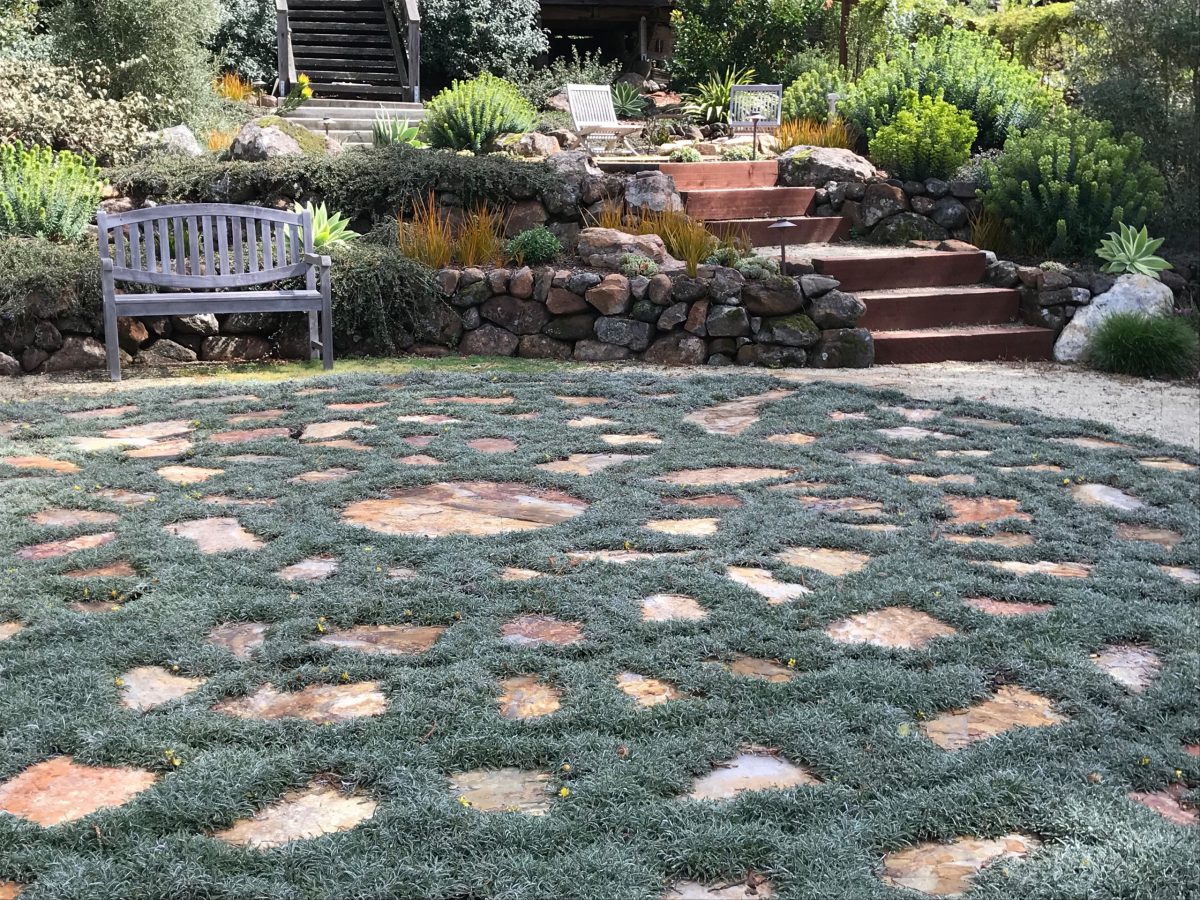
Thyme thrives in full sun and poor, sandy soils. It produces fragrant purple blooms in summer and is one of the best choices for filling the gaps between stepping stones or pavers.
Asian Jasmine (Trachelospermum asiaticum)
A tough, shade-loving evergreen groundcover widely used throughout the Southeast. It spreads quickly, suppresses weeds, and works exceptionally well on slopes and under mature trees where grass refuses to grow.
Creeping Phlox (Phlox subulata)
This plant loves the sun and forms a colorful spring blanket of pink, purple, or white blooms. It’s ideal for borders, slopes, and open areas receiving several hours of sunlight.
Creeping Buttercup (Ranunculus repens)
A resilient groundcover for damp areas where most plants struggle. It tolerates poorly drained soil, low-lying spots, and edges of water features.
Comparison Table: Popular Southeast-Friendly Groundcovers
| Plant | Light | Water | Heat Tolerance | Foot Traffic | Notes |
|---|---|---|---|---|---|
| Microclover | sun / part shade | low | high | good | nitrogen-fixing, green year-round |
| Mentha requienii | shade / part shade | medium | medium | light–moderate | aromatic, thrives in humidity |
| Creeping Thyme | full sun | low | high | good | great between stepping stones |
| Asian Jasmine | shade | low | high | low | dense coverage, slope-friendly |
| Creeping Phlox | sun | low | high | limited | heavy spring bloom |
| Ranunculus repens | part shade | high | medium | limited | ideal for wet areas |
How to Choose the Right Groundcover for Your Yard
The biggest mistakes happen early — during plant selection. Not all groundcovers behave the same way, and local microclimate matters more than most people expect.
Understand the light conditions
Observe your yard throughout the day. Areas under pine or oak trees may receive only filtered light. Compact front yards may get strong afternoon sun. The key to success is choosing plants suited to specific light patterns.
Prepare the soil
Though most groundcovers are not demanding, loose topsoil will help them establish faster. Adding leaf mold, compost, or a thin layer of mulch gives young plants an early advantage.
Decide whether foot traffic is important
If people (or pets) will walk across the area regularly, choose microclover or creeping thyme. Asian jasmine and blooming groundcovers are better for decorative zones.
Start small
Rather than replacing the entire lawn at once, begin with a few targeted areas — under trees, along paths, or in front of a porch. This allows you to test how plants respond to your exact conditions.
Pay attention to moisture
The Southeast’s humidity can be either a blessing or a challenge. Mint and buttercup love moisture, but thyme and phlox may develop fungal issues in low airflow areas. Grouping plants by their water needs helps prevent problems.
What Groundcover Care Really Looks Like
Gardeners are often surprised by how low-maintenance these plants truly are once they settle in.
During the first year:
• consistent watering until roots develop;
• removing large weeds;
• occasional trimming (microclover).
After establishment:
• little to no supplemental watering;
• minimal trimming;
• refreshing mulch once or twice a year.
Compared to a lawn, it’s almost effortless — no weekly mowing, no overseeding, and no battling fungal diseases after summer storms.
 Design Ideas: Using Groundcovers to Transform Your Landscape
Groundcovers offer opportunities that turfgrass simply can’t match. They add visual interest, texture, fragrance, and variation across the yard.
Under trees
Asian jasmine or Corsican mint creates a polished, unified look around trunks where turf rarely survives.
Between pathways
Creeping thyme softens stone or gravel paths with natural beauty and a pleasant scent.
On slopes
Microclover, phlox, and jasmine prevent erosion and secure the soil during heavy rains.
In patio and courtyard spaces
Low-growing varieties form living mosaics that make small areas feel lush and inviting.
What to Know Before Replacing Your Lawn Completely
A full lawn conversion is absolutely achievable, but it benefits from planning and patience.
Avoid chemical kill-off
Smothering methods — cardboard, mulch layering — are safer for soil and allow for healthier planting later.
Incorporate islands of variety
Mixing groundcovers creates natural layers and supports pollinators.
Consider insects
Blooming groundcovers attract bees. Great for the ecosystem, but maybe not ideal near a busy doorway.
Keep a small section of turf if desired
A hybrid yard — partly groundcovers, partly low-maintenance turf — works well for households with children or pets.
Groundcovers as a Path to Sustainable Gardening
Groundcover-based landscapes redefine what a Southern garden can be: resilient, attractive, eco-friendly, and free from constant labor. Instead of fighting humidity, shade, or downpours, you work with your environment. Over time, these plants enrich the soil, cool the ground surface, protect against erosion, and reduce your dependence on chemicals and irrigation.
If you choose thoughtfully — matching plants to light, moisture, soil, and foot-traffic needs — groundcovers can become the foundation of a sustainable, long-lasting landscape that only gets better as it grows.